

Learn
Resources and information about bi+ people and our priorities
Whether you're exploring your own identity, supporting someone you care about, or looking to make positive change for bi+ communities, you'll find information and resources here to help you along the way.
BI-CON FACTS
How do I know if I am bi+?
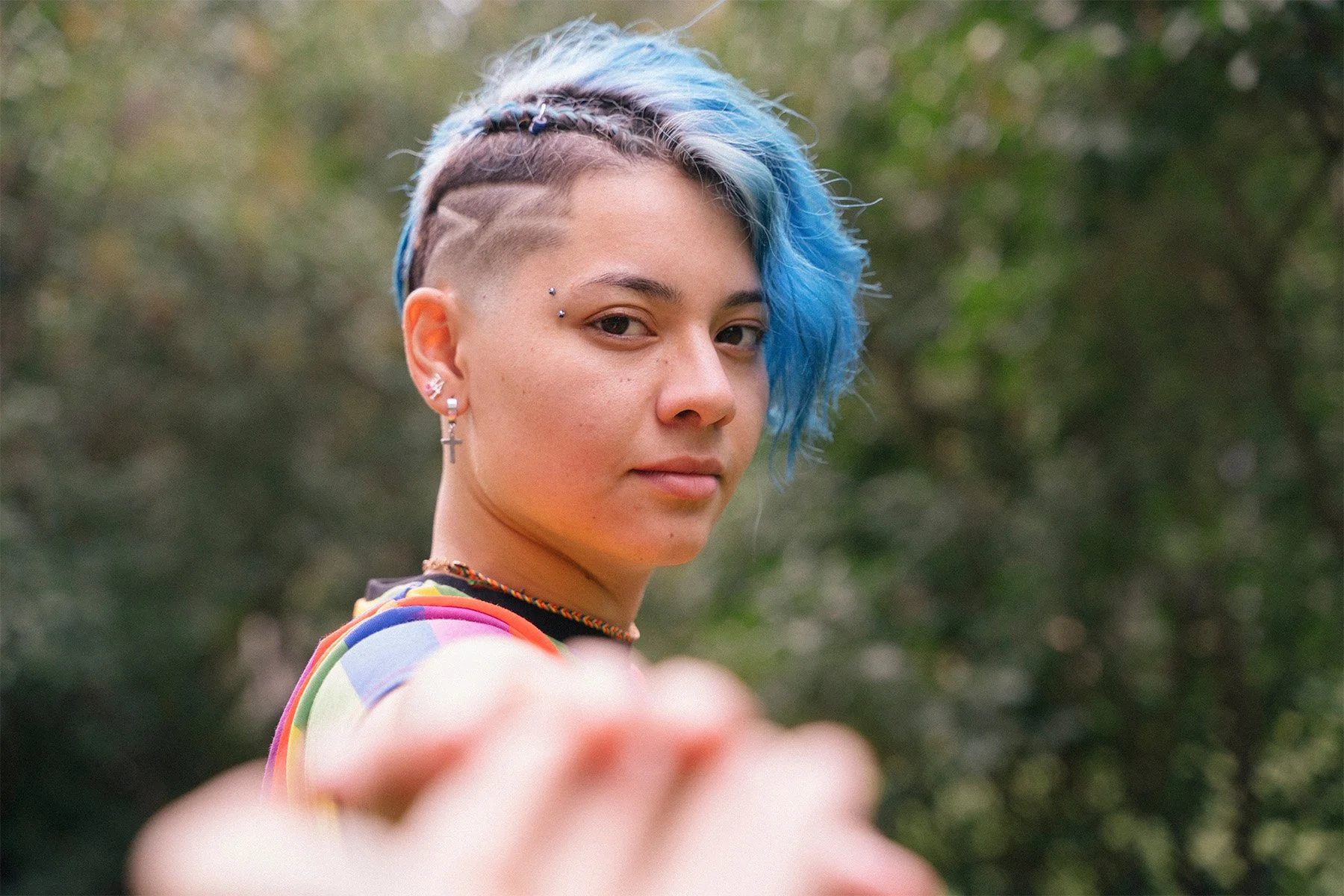
If you feel attracted to people of different genders, then you fit within the term bi+.
For some people, that might feel very obvious from a young age. For others, attraction might develop later. There are many ways to discover your bi+ identity, and it’s OK if you are still figuring it out.
But if you feel attraction to different genders, or are wondering if you might, then you’re one of us. A great thing about bi+ communities is that we tend to be very inclusive. We don’t focus on gatekeeping who’s in or who’s out.
-
You don’t have to feel identical attraction to women, men, and people who are outside the gender binary, in order to be bi+. For example:
Some bi+ people might find they are frequently attracted to women, and occasionally to men and/or non-binary people, or vice versa
Some might find they are romantically attracted to masc people and sexually attracted to femme people, or vice versa
Some find their attraction changes over time. They might go through periods of being attracted mostly to people of their own gender, and then periods where they feel more attracted to people of other genders
Some bi+ people find they are attracted to people of most or all genders, most of the time.
All of this fits under the bi+ umbrella. What bi+ people do have in common is that our attraction is not limited to people of just one gender.
-
Being bi+ is about attraction, not behaviour. For example:
Some bi+ people have lots of sex with lots of people of different genders.
Some bi+ people have only ever had sex with people of one gender.
Some bi+ people have never had sex, and some may not want to. (Some asexual people are bi+.)
Bi+ people can be in intimate relationships of all types - monogamous, non-monogamous, polyamorous, married or unmarried. Some only ever have one partner and some have many.
You don’t have to prove your ‘bi+ credentials’ to anyone. If you feel attracted to people of different genders, then you’re entitled to the word bi+. -
That’s great. No-one else has the right to tell you what word/s you should use to describe yourself. Only you can figure that out, based on what feels like a good fit for you. Whatever you choose, we’ll respect it.
Bi+ is a general umbrella term covering a whole range of ways of describing multi-gender attraction, such as bisexual, pansexual, omnisexual, queer, fluid, heteroflexible, homoflexible and more. Many bi+ people use one or more of these words for themselves; others prefer no labels. It’s up to you!
For more about labels, see our Definitions article.
What is great about being bi+?
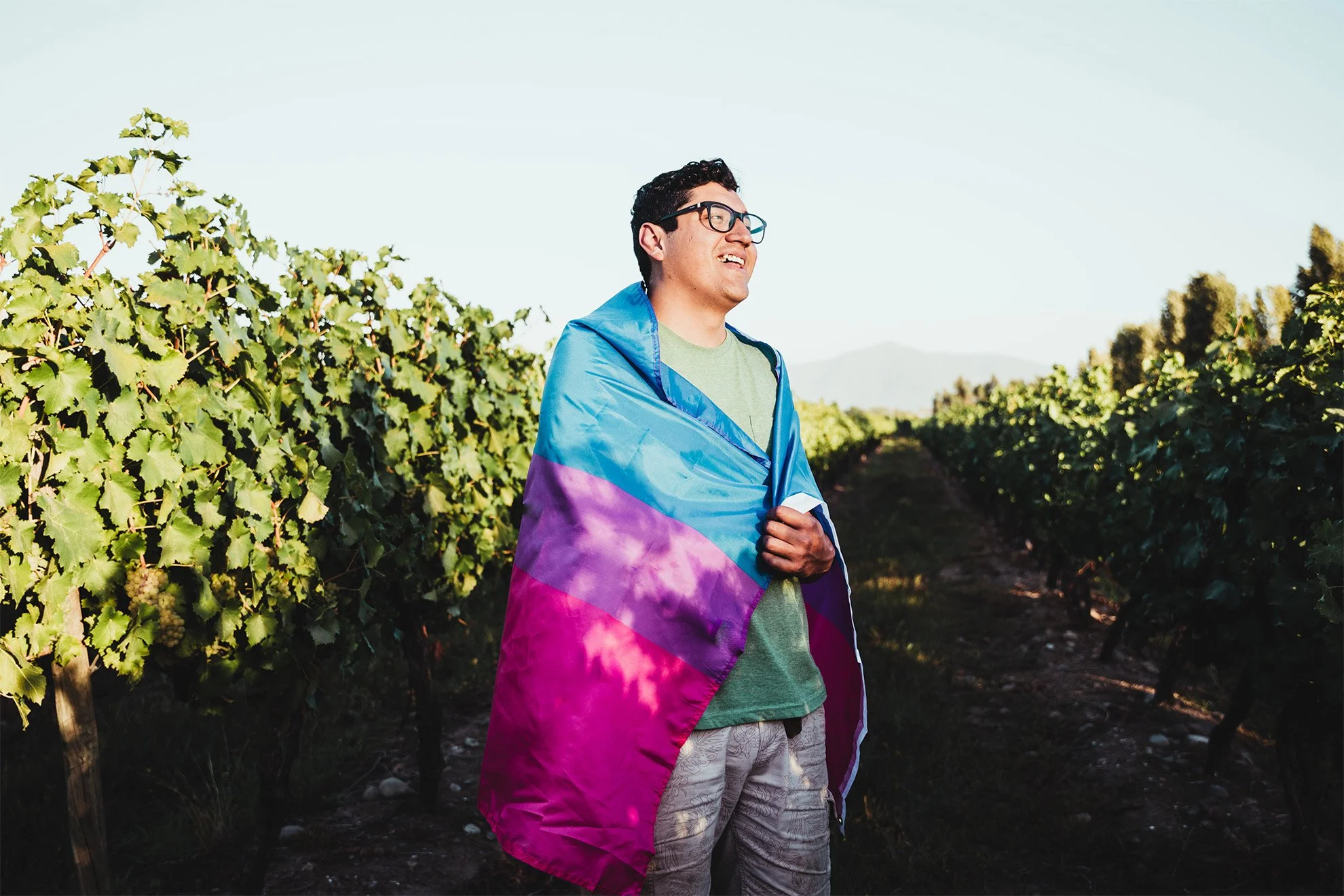
Being bi+ is great in many ways!
Let’s start with the obvious. Bi+ people get to feel attraction to many different people of different genders. Those of us who choose to can also explore intimate relationships, sexual experiences and human interactions without limitations of gender. This can help make our experiences with other people, and our lives, very rich and diverse.
-
Bi+ people often have really reflective and nuanced approaches to relationships with others. This connects to our openness to different kinds of human interactions, and our willingness to stand outside limitations on gender roles.
Many bi+ people are interested in genuinely equal partnerships, based on what the people in them really want rather than society’s expectations. We often think carefully about consent and we build strong empathy and communication skills through navigating different types of human connections. This opens the door to really fulfilling relationships. -
Being bi+ can often be a driver for personal growth. For many of us, there’s a journey of self-awareness and reflection that comes with our multi-gender attraction. This can help us to create our own script, to make life choices that work for us, and to practise affirming and reaffirming who we are. As well as building our own inner strength, this can help to grow our compassion for others from many different backgrounds.
The freedom and self-awareness that can come with being bi+ can be about more than just sexuality. It can help to open up freedom around gender expression, relationship structures, ideas, life changes, and more.
Many bi+ people are also very creative. Perhaps this is connected with our ability to think outside the boxes that society gives us, and to see things from multiple perspectives. Perhaps it’s about having the courage to break the rules and be authentically ourselves. Either way, bi+ folk tend to lean towards embracing possibilities rather than rejecting them. This can fuel our creativity. -
Finally, bi+ community can also be awesome to be part of. Like any community, we sometimes have our tricky issues to deal with. But overwhelmingly we have found bi+ people to be insightful, fun, supportive and welcoming. We love to hang out with other bi+ people and we’re proud to be part of bi+ community!
If you want to read more about the strengths of bi+ people, check out this article.
How does society discriminate against bi+ people?
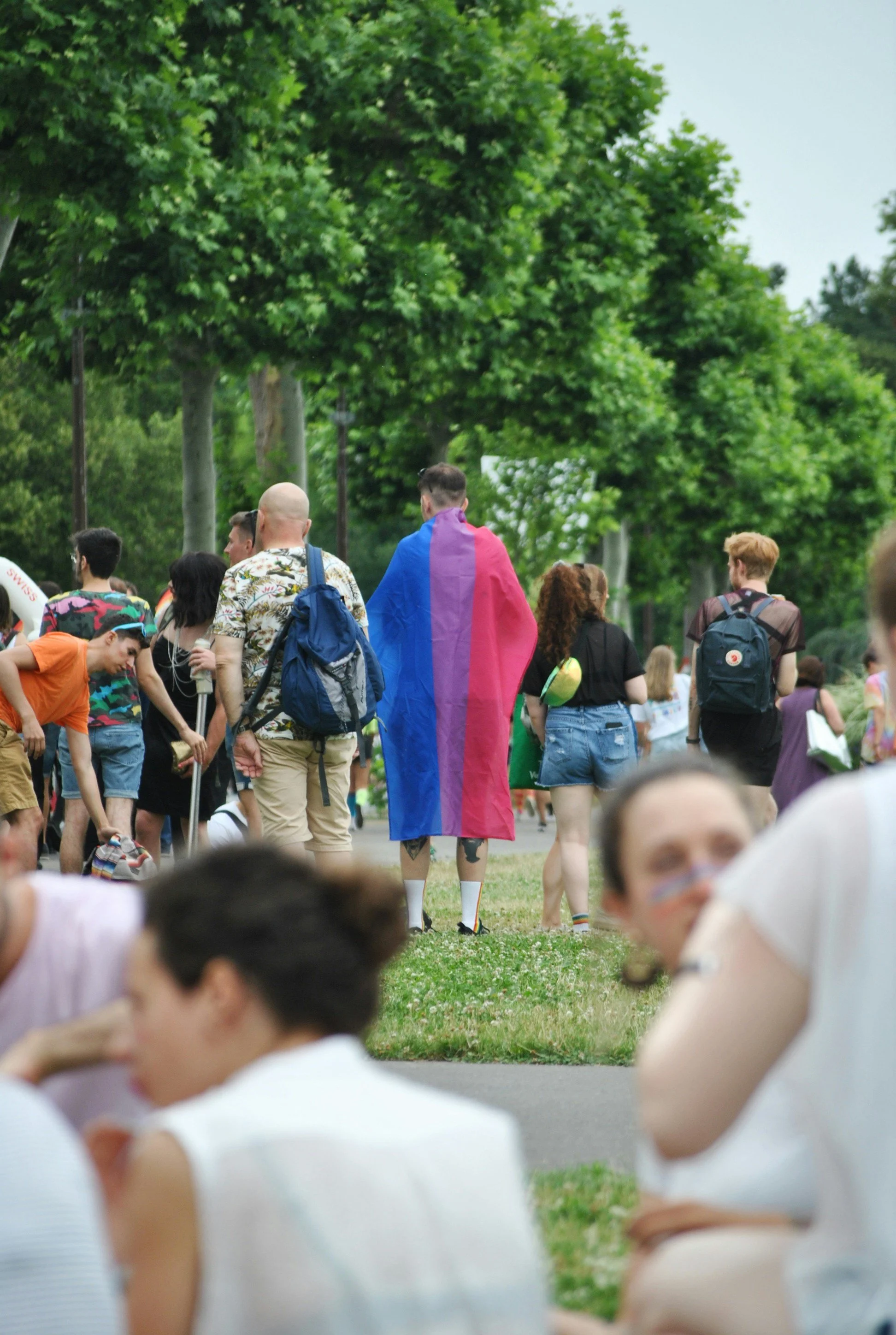
Although being bi+ itself is great, how we are treated by society often isn’t.
As bi+ people, we can face prejudice and discrimination from others because of our multi-gender attraction. This is called biphobia.
-
Biphobia can show up in many different ways. Here are a few examples:
Repeating negative stereotypes about bi+ people (e.g. saying that that bi+ people are ‘greedy’ or untrustworthy)
Undermining bi+ people’s sense of self (e.g. questioning whether someone is ‘really bi’; asking someone to prove they are bi+)
Pressuring bi+ people to give up their identity and conform to social expectations (e.g. pressuring bi+ people to present as straight, gay or lesbian to fit in with others)
Rejecting bi+ people (e.g. discriminating against bi+ people in dating; refusing to employ a person who is known to be bi+)
Refusing services or making it difficult for bi+ people to access services (e.g. stigmatising bi+ men who disclose their identity in a health service)
Failing to fund services or opportunities for bi+ people to the extent that these are funded for other groups within society (or at all)
Passing laws that treat bi+ people worse than other groups within society
Abusing or physically assaulting bi+ people.
-
Alongside biphobia sits bi erasure. This is a widespread pattern of ignoring or dismissing evidence of bi+sexuality and of not acknowledging bi+ experience. This pushes bi+ people to the margins and undermines our identities and our mental health.
Bi erasure can occur in everyday language - for example, the term “gay marriage” makes bi+ people invisible (a more inclusive term is “marriage equality” which covers bi+ as well as lesbian and gay experience). Bi erasure can also be seen in harmful assumptions - such as the assumption that a person is straight because they have a different gender partner, or homosexual because they have a same-gender partner. More extreme versions of bi erasure occur when people remove or cover up evidence of bisexuality (for example in history or the media), or actively set out to prove that bi+ people don't exist. -
Biphobia and bi erasure have serious harmful effects on bi+ people. These forms of discrimination can leave bi+ people with feelings of shame, worthlessness and anxiety. Stress and stigma can affect bi+ people's wellbeing, lead to isolation and to people feeling they need to hide who they are. In turn this can undermine people’s relationships and ability to access services. Research has shown that bi+ people overall have higher rates of poor mental health, family violence, sexual assault, substance use, poverty and homelessness compared to others in the community. Prejudice and discrimination drive these outcomes.
Biphobia often combines with other forms of prejudice and discrimination including misogyny, homophobia, transphobia, racism, ableism, classism and more. Overlapping discrimination means some people face more extreme harm than others.
Bi+ people experience biphobia and bi-erasure from the straight community, but our acceptance within the LGBTIQA+ community can also be patchy. Historically there have been many instances of hostility towards bi+ people from those in power within queer institutions.
Bi+ people often hear the message that we are not welcome anywhere because we are ‘not straight enough for the straight community, and not queer enough for the LGBTIQA+ community’. This message is a classic example of monosexism (social attitudes and structures that privilege attraction to one gender over attraction to multiple genders). The message that bi+ are not welcome is based on seeing straight, lesbian and gay identities as valid, while the fluidity that comes with being bi+ is pushed aside. In fact, bi+ people are valid and belong in both the queer and straight communities.
For more about prejudice and discrimination against bi+ people, see our article on Understanding monosexism and biphobia.
What needs to change to create better outcomes for bi+ people?
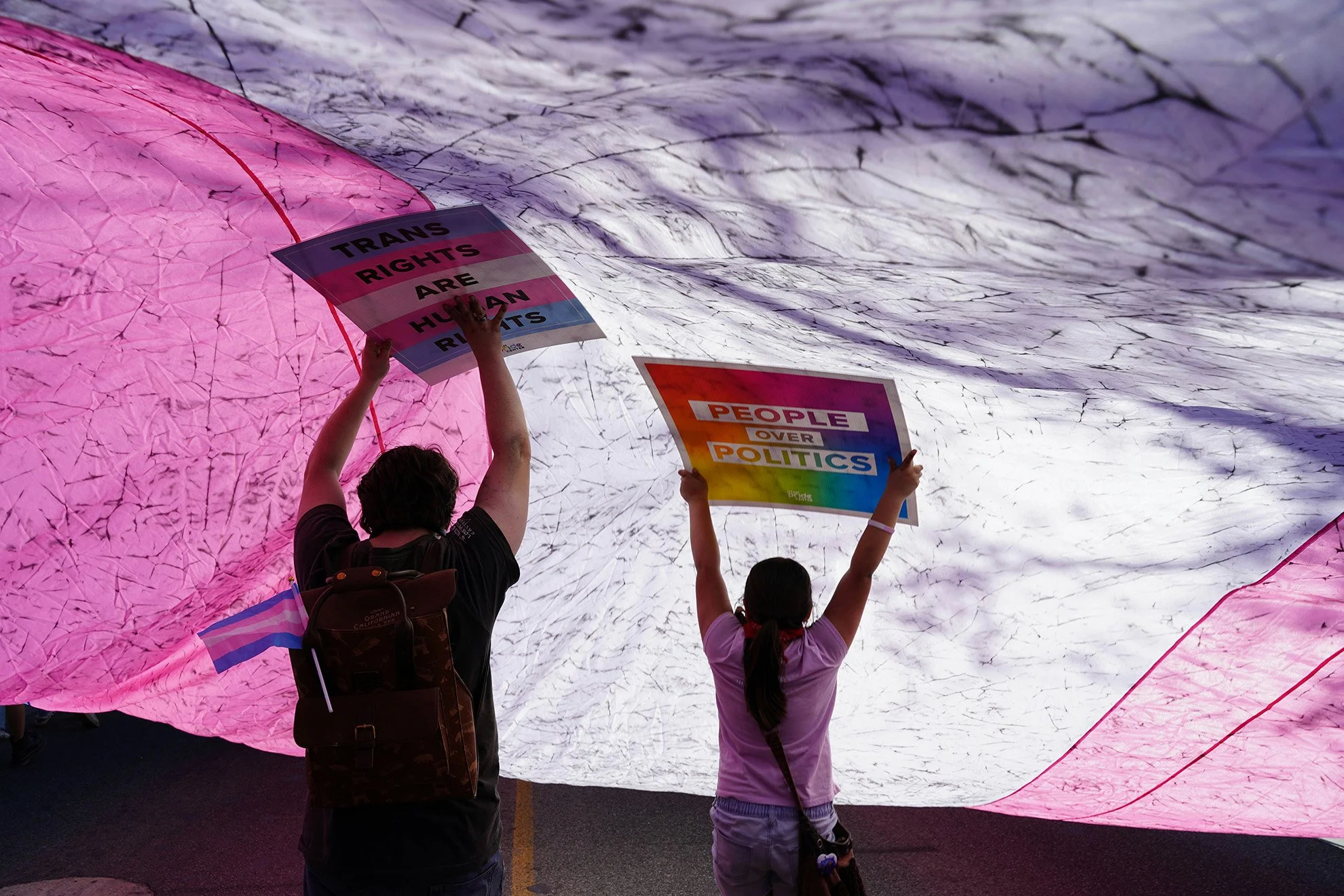
We need changes in understanding, attitudes, services, policies and laws, to ensure that bi+ people are respected and celebrated alongside people of other sexual orientations.
There are hundreds of millions of bi+ people around the world - and hundreds of thousands in Victoria alone. Being bi+ is part of the normal range of human sexuality and bi+ people have many valuable strengths and perspectives to contribute to society.
Despite this, we face ongoing invalidation, discrimination and invisibility in many areas of life due to biphobia and bi erasure.
-
To overcome invalidation, discrimination, and invisibility, we need change at multiple levels:
Community - we need growing understanding of bi+ sexuality across society. This will help to dispel harmful prejudices and assumptions, challenge discrimination and to develop a culture in which being bi+ is unremarkable.
Public life - we need more visibility and more positive and nuanced representation of bi+ people and experiences, across media, sport, the arts, politics and within business and organisations. This will help to create space and validation for people to own their bi+ identities.
Services - we need better funded, more bi-friendly services, including bi+ specific supports as well as better access to and inclusion in generalist and LGBTIQA+ services. This will enable bi+ people to access effective support when needed.
Policies and law - we need government policies and legislation that explicitly recognise bi+ group as a substantial group within society, and are informed by bi+ people’s needs. This will more effectively improve the wellbeing of bi+ people and prevent discrimination and harm to us.
Bi+ people have achieved significant progress in these areas over recent decades. There is still much more to do.
-
Changing things for the better will require strong, persistent advocacy led by bi+ people.
Improving responses to biphobic and queerphobic hate crimes, via preventative strategies, law reform, and improved support for victims of hate crimes
Improving responses for bi+ people experiencing family / intimate partner violence, including improved bi-awareness and access within the service system
Gaining explicit bi+ inclusion in a range of government policies and strategies and ensuring they recognise the specific needs and wellbeing impacts experienced by bi+ people, for example in relation to health, community services, education, aged care and more
Opposing attempts to undermine the rights of bi+ people, especially attempts to remove protections and services for trans and gender diverse people (who have a substantial overlap with the bi+ community)
Improving bi+ representation in the media, by challenging bi erasure and the repetition of negative stereotypes
Continuing to improve inclusion of bi+ people within LGBTIQA+ communities, services and events
Gaining funding for bi+ specific services and supports to address the unique needs of bi+ people and to assist bi+ people to better access mainstream and LGBTIQA+ services that they need.
We work towards these goals in a range of ways - conversations, meetings, public communications, submissions, input to policies, and more. All our work, including our advocacy, is in service of our charitable purpose: the benevolent relief of poverty, distress or disadvantage suffered by multi-gender attracted people as well as their support networks. -
Would you like to work together with us to help make a difference for bi+ people? We welcome bi+ people and allies joining our advocacy efforts. Contact us today to find out how you can contribute, and see our Get Involved page for more.
Where can I find support?
If you’re a bi+ person in Victoria and need support, reach out to some of the groups, services or practitioners listed below. They are queer-friendly and they welcome you getting in touch.
Want to connect with other bi+ people, share your experiences and hear from others?
Bi+ Pride Victoria’s monthly online discussion group is a safe space for bi, pan, and other multi-gender attracted folks to find understanding and support from our community. Led by an experienced bi+ facilitator. Newcomers and old friends always welcome! Our community events can also be a great way to connect with others. See our Events page for details.
-
Living Positive Victoria’s Bi++ group has you covered. Bi++ is a space to connect, share, and celebrate your identity with others who understand. This group runs a range of fun social events and discussions and is a great way to find peer support.
-
If you, or anyone else around you is in immediate danger, call 000.
Beyond Blue provides mental health support. Available 24/7, on 1300 22 4636. You can also chat to a counsellor online, connect with online peer community, or access free mental health coaching. This service is Australia-wide.
Lifeline is for anyone experiencing emotional distress. Call 13 11 14 for 24 hour crisis support and suicide prevention services. They also offer support via SMS and online chat. Their website is full of lots of useful mental health support information. This service is Australia-wide. -
QLife provides anonymous and free LGBTIQ+ peer support and referral for people in Australia wanting to talk about sexuality, gender, bodies, feelings or relationships. QLife operates between 3pm to 9pm daily. You can call them on 1800 184 527 or use their peer-to-peer webchat service. QLife is Australia wide and is operated by Switchboard in Victoria.
Rainbow Door is a free, specialist LGBTIQA+ helpline for all Victorians. Rainbow Door can assist you to access support on issues such as family and intimate partner violence (including elder abuse), alcohol and other drugs, suicidal thoughts, relationship issues, sexual assault, social isolation, mental health, and wellbeing. You can get support via SMS, email or phone call. Available 10am - 5pm, 7 days a week.
Queerspace provides support for members of the queer community in Victoria. Services are available in person, via telehealth and online, including individual, relationship and family counselling. Peer support groups are also available and there are programs for young people, parents and others. This is not a crisis service.
Thorne Harbour Health provides a range of health, support and education programs in Victoria and South Australia. Services include the sexual health clinic, general practitioners, support to live well with HIV, mental health support, LGBTIQA+ affirming family violence support, alcohol and other drug services, the Equinox trans and gender diverse clinic, and more. This is not a crisis service.
Pride in Place supports LGBTQIA+ people in Victoria who are homeless, at risk of homelessness, or living in unsafe, insecure or unaffordable housing. Pride in Place currently provides services across Hume, Merri-bek, Inner Western Metro, Outer Eastern Metro and Central Highlands regions of Victoria.
Q+Law is a Victoria-wide service, which provides a free entry point to accessing legal assistance for all individuals who identify as part of LGBTIQA+ communities. Individuals identifying as LGBTIQA+ can contact the service for initial advice, information or referral. The service is available over the phone, online or in person.
Family Access Network provides support and housing for young people aged 16-25, with a specialist focus on LGBTIQA+ youth, in Melbourne, Victoria.
QHub is based in Geelong and Ballarat, and provides a safe, inclusive, and affirming space for LGBTIQA+ young people and their families. This program has a focus on mental health, wellbeing, and social connection.
Minus18 creates spaces of belonging and connection for LGBTQIA+ young people. They run a range of events across Australia including the fabulous Queer Formals, offer a discord server, a youth leadership program and more. -
The following counsellors and psychologists have strong links with the bi+ community and are very experienced in supporting people in ways that affirm bi+ and queer identities.
Northside Counselling Solutions - Anthony Lekkas
Melbourne Queer Psychologist - Juniper Muller (not taking new clients 2026)
Fairy Wren Counselling - Vanessa Bowen
SHIPS (Sexual Health and Intimacy Psychological Services) is an LGBTIQA+ affirming psychology clinic based in Melbourne. SHIPS offers therapy and support around sexual health, intimacy and mental health.
You can find more counsellors and psychologists on the Victorian Inclusive Practitioners List. This is a list of therapists and health practitioners in Victoria who work with various marginalised social groups, including LGBTIQA+ people, people who are neurodiverse, people from specific ethnic or religious backgrounds, and more. The list includes some practitioners who are bi+ themselves, and/or have expertise in working with the bi+ community.
For organisations and practitioners – How can I better include and support bi+ people?
Great question, thanks for asking!
Bi+ people need connection and support as much as anyone else. And research shows that the bi+ community has high rates of health and support needs compared to the general community and other parts of the LGBTIQA+ community. However, bi+ people often face barriers to accessing and feeling welcome in organisations and services.
-
This is particularly notable in health and community services, and can lead to bi+ people not seeking or receiving the help they need around their health and support needs. For example, a 2026 Australian study on bi+ people’s experiences of sexual health services found that less than half of bi+ people (47%) felt welcome in LGBTQ+ sexual health services, and only 41% felt general sexual health services were knowledgeable and inclusive of bi+ people. Bi+ men are among those least likely to feel supported in accessing services.
One of the lead researchers commented: “These findings show that bi+ people are engaging with health care, but systems are not meeting them where they are. Health care services tend to assume you are either gay or straight by default which can make many bi+ people feel invisible in these services.”
Stigma from society contributes to people’s hesitancy around disclosing bi+ identity and seeking support. However, the barriers are often made higher by organisations and staff lacking bi+ awareness and inclusive practice approaches. Poor experiences with services means people are less likely to re-engage. -
Here are six key areas that any organisation or practitioner can focus on, to better include and support bi+ people.
Create a welcoming environment, free of biphobia and bi erasure. Ensure that staff understand the diversity of human attraction, and the existence of biphobia and bi erasure. Don’t assume that general efforts to build up LGBTIQA+ awareness will address the specific experiences of bi+ people - they often don’t. Educate yourself and your staff around bi+ issues; don’t expect clients or customers to do this for you. And ensure that there are clear and effective anti-discrimination policies in place, covering biphobia, transphobia and homophobia as well as other forms of discrimination and harassment.
Don’t make assumptions about sexuality and gender. It is frustrating and stressful for bi+ people when staff or services make assumptions about their sexuality without checking. Don’t assume that a client or customer is straight if they are accessing a mainstream organisation; don’t assume they are gay or lesbian if they are accessing a LGBTIQA+ community organisation. Don’t assume their sexuality based on the gender of their partner. Signal that you are aware of and comfortable with the existence of bi+ people, and provide space for people to disclose if they choose. Check forms and databases closely to ensure they don’t ignore or erase bi+ identities.
Use inclusive language. This sometimes means explicit inclusion - for example, including ‘multi-gender attracted’ when writing a list of sexual orientations. (You might also consider adding common identities such as bi, pan, queer, and fluid.) More often, it is about using general, non-specific terms that do not exclude anybody. Don’t say ‘gay’ if you mean queer or LGBTIQA+ - many bi+ people don’t feel included by the word gay. Allow people to self-describe their sexuality in situations where that is relevant; don’t place a label on them.
Help bi+ people feel seen. Check that visual branding, marketing and promotion uses imagery that is inclusive of all members of the LGBTIQA+ community. Provide explicit inclusion through use of the bi and pan pride flags and use bi+ specific language. Recognise bi+ specific days such as Celebrate Bisexuality Day, and Pansexual and Panromantic Visibility Day, as well as more general LGBTIQA+ days such as IDAHOBIT. Foster an environment in which people in leadership roles are supported to be as open about their sexual and gender diversity as they choose to be.
Reflect inclusion in policy. Ensure that your diversity, inclusion and non-discrimination policy is up to date and covers the breadth of sexual orientations and gender identities. Incorporate a commitment to diversity and inclusion in guiding documents for your organisation. Check that data privacy policies for staff and clients/customers have strong safeguards protecting people who belong to marginalised communities.
Continue to reflect, learn and improve. Putting a policy in place or running a training session is helpful, but what is really needed is ongoing work to develop a culture of awareness and inclusion across all staff. Ensure that feedback mechanisms are in place and create opportunities for ongoing learning and reflection. Ensure that organisational development is informed by living experience from within the bi+ community, as well as other diverse communities.
-
Bi+ Pride Victoria provides expert advice and training on these topics through our consultancy service. Please contact us for a conversation about what you’re looking to improve, and we’ll let you know how we can help.

More Resources
Definitions and Understanding
Definitions - Bisexuality and multi-gender attraction
There are many different ways that people understand and describe their experience of being attracted to people of different genders. These are some common terms that people use, and what they mean.
Understanding biphobia and bi erasure
Biphobia is prejudice, discrimination, or hostility directed towards bi+ people (or towards people who are perceived to be bi+). It includes negative attitudes and behaviours that marginalise, stigmatise, or invalidate bi+ / multi-gender attracted people and their experiences.
Bi+ Pride Victoria publications
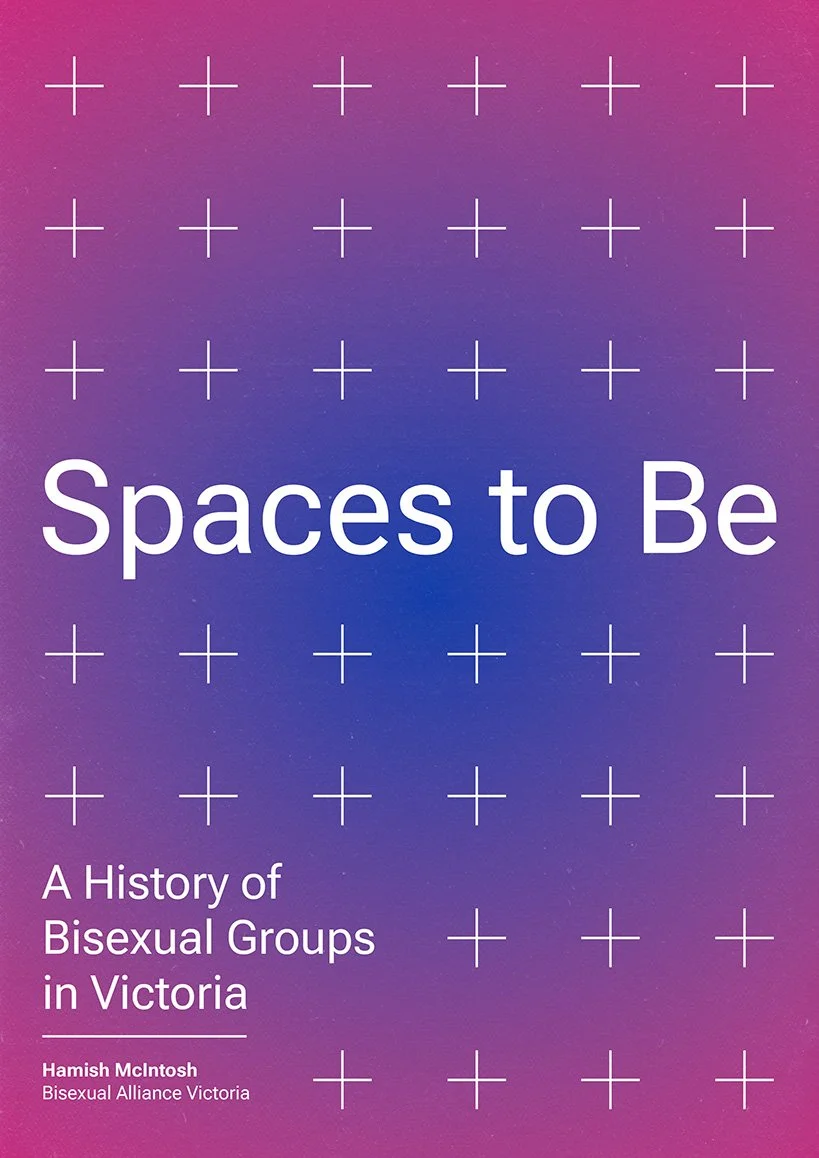
Spaces to Be explores the history of bisexual community groups in Victoria from the 1970s to the 2020s. This research project identified nine significant bisexual groups in Victoria during this time, and provides rich insight into their history, purposes and focus.
Bi the Way: A Guide to Bisexual+ Research
Bi the Way is an updated set of guidelines for Bi+ inclusive research. Bi the Way aims to support research into bi+ people and ensure that research more accurately represents the community, is inclusive of community needs, and relevant to important contemporary issues of sexual identity, attraction, and behaviour.
Submission to Inquiry on Anti-LGBTIQA+ Hate Crimes
In 2026 the Victorian Parliament's Legislative Council Legal and Social Issues Committee held an inquiry into anti-LGBTQIA+ hate crimes in Victoria. Bi+ Pride Victoria surveyed bi+ people and provided a submission to the Inquiry, featuring community voices.
Intimate Partner Violence: Bi+ Inclusive Practice Report
Bi+ women experience high rates of intimate partner violence (IPV), are often failed by the health and justice systems and yet are largely invisible from current IPV frameworks and practice. This 2023 report presents the findings of a project exploring the experiences and needs of bi+ women who are exposed to IPV.
Books about bi+ issues
There are many great books about bi+ experiences, issues and perspectives. Here are a few of our favourites.
Bi: The Hidden Culture, History and Science of Bisexuality by Dr Julia Shaw. A great introductory book that celebrates the resilience and beautiful diversity of the bi community. See also this article explaining how Julia wrote this book to answer all the questions she had about being bisexual.
Bi The Way: The Bisexual Guide to Life by Lois Shearing. Whether you are openly bisexual, still figuring things out or just interested in learning more about bisexuality, Bi The Way is a helpful guide. Includes first-hand accounts from bi advocates, and practical tips on dating, sex, biphobia, bi-erasure, coming out, activism and gender identity.
Bi: Notes for a Bisexual Revolution by Shiri Eisner. A comprehensive look at bisexual politics and a starting point from which to launch a bisexual revolution!
Greedy: Notes from a Bisexual Who Wants Too Much by Jen Winston. A hilarious and wise collection of essays, offering an intimate look at bisexuality, gender, and, of course, sex. In this book Jen attempts to make sense of herself as she explores what it means to be "queer enough," and how to overcome bi stereotypes.
Sexual Fluidity: Understanding Women's Love and Desire by Lisa Diamond. In this book Lisa argues that for some women, love and desire are not rigidly heterosexual or homosexual but fluid, changing as women move through the stages of life, various social groups, and, most important, different love relationships.
Women in Relationships with Bisexual Men: Bi Men By Women by Maria Pallotta-Chiarolli. An intimate journey into the experiences and insights of 79 Australian women in relationships with bisexual men.
Bi Men: Coming Out Every Which Way edited by Ron Jackson Suresha & Pete Chvany. A diverse collection of personal narratives, offering insight into the experiences of bisexual men. Through candid accounts, it explores the challenges, joys, and complexities of coming to terms with one's sexuality within a heteronormative society.
Bisexual Men Exist: A Handbook for Bisexual, Pansexual and M-Spec Men by Vaneet Mehta. This book explores the challenges faced for bisexual men specifically including bi erasure, coming out, dating, relationships and health. This is a combination of Vaneet’s own lived experience as well as stories from the other men in the bi community.
Bisexual Married Men - Stories of Relationships, Acceptance, and Authenticity by Robert Cohen. Diverse and relatable personal stories from interviews with bi+ men married to women, plus overarching reflections on themes from these interviews.
Step Bi Step - The Ultimate Guide for Bisexual, Pansexual and Queer Young People by Laura Clarke. A fantastic guide to thriving as a bi, pan, or queer young person.
Queer Up: An Uplifting Guide to LGBTQ+ Love, Life and Mental Health by Alexis Caught. While not a book focused solely on bisexuality this is a great starting point for adolescents (and their allies looking to support!) exploring their sexuality.
Getting Bi: Voices of Bisexuals Around the World edited by Robyn Ochs and Sarah Rowley. An awesome collection of personal stories and essays exploring multi-gender attracted identity, by people from 42 countries around the world.
Podcasts and radio shows
Great info, conversations and perspectives for your bi+ brain!
Out of the Pan (3CR Community Radio Melbourne, Sundays 12-1pm, or listen via podcast). Hosted by Sally Goldner, long-term pansexual activist and general bicon! This show covers pansexual issues, pansexual meaning "knowing no boundaries of sex or gender", including trans and gender diverse, bi+, polyamorous and queer issues, news and events.
Two Bi Guys (US-based podcast). Hosted by bi+ author, life coach and stand-up comedian Robert Cohen. A podcast about fluid sexuality, gender, masculinity and femininity, intimacy, relationships and more. Especially good for learning about the diverse perspectives of bi+ men.
By the Bi (Sydney-based podcast). An award-winning Australian podcast exploring bisexuality, open relationships, kink, and modern connection with honesty and humour.
Bisexual Brunch (UK-based podcast). A unique podcast for people who identify as bi to come together and celebrate their sexuality.
Triple Bi Pass (podcast from JOY Media Melbourne - produced between 2016 and 2022). A show with a focus on bisexuality - but it’s not a how-to program or a political call-to-action. If anything, the show is about busting stereotypes. The hosts are not spokespersons for the bi community, nor are they experts in gender theory. They are just people having a fun chat who happen to be bi.

Websites
bi.org (USA). Has a huge and enjoyable range of resources, reviews, stories, interviews and more. Have fun exploring!
Bisexual Resource Center (USA). Boston-based not-for-profit, working towards an empowered, visible, and inclusive global community for bi+ people.
The Bisexual Research Group (international). Researchers, educators, and activists working towards better understanding, visibility, and inclusion of bi+ experiences.
Articles and blog posts
A few of the thousands of good magazine articles and posts about bi+ issues. See also Bi Women Quarterly for heaps of good articles.
Dating as a bisexual man: The joy of holding space. Patrick Lenton (2022), Archer Magazine.
Bisexual pride: How to thrive as a bi+ person. Adele (delsi cat) Moleta (2022), Archer Magazine.
Blak, bi and not a guy: On intersecting identities. Ulysses Thomas (2022), Archer Magazine.
Discovering aegosexuality through art: Neurodivergence, desire and Jessica Rabbit. Cynthia Spleen (2023), Archer Magazine.
Research
A growing amount of research has focused on bi+ people over the past few decades. The following studies provide useful information about bi+ needs and experiences in the Australian context, often within a broader picture of LGBTIQA+ experiences.
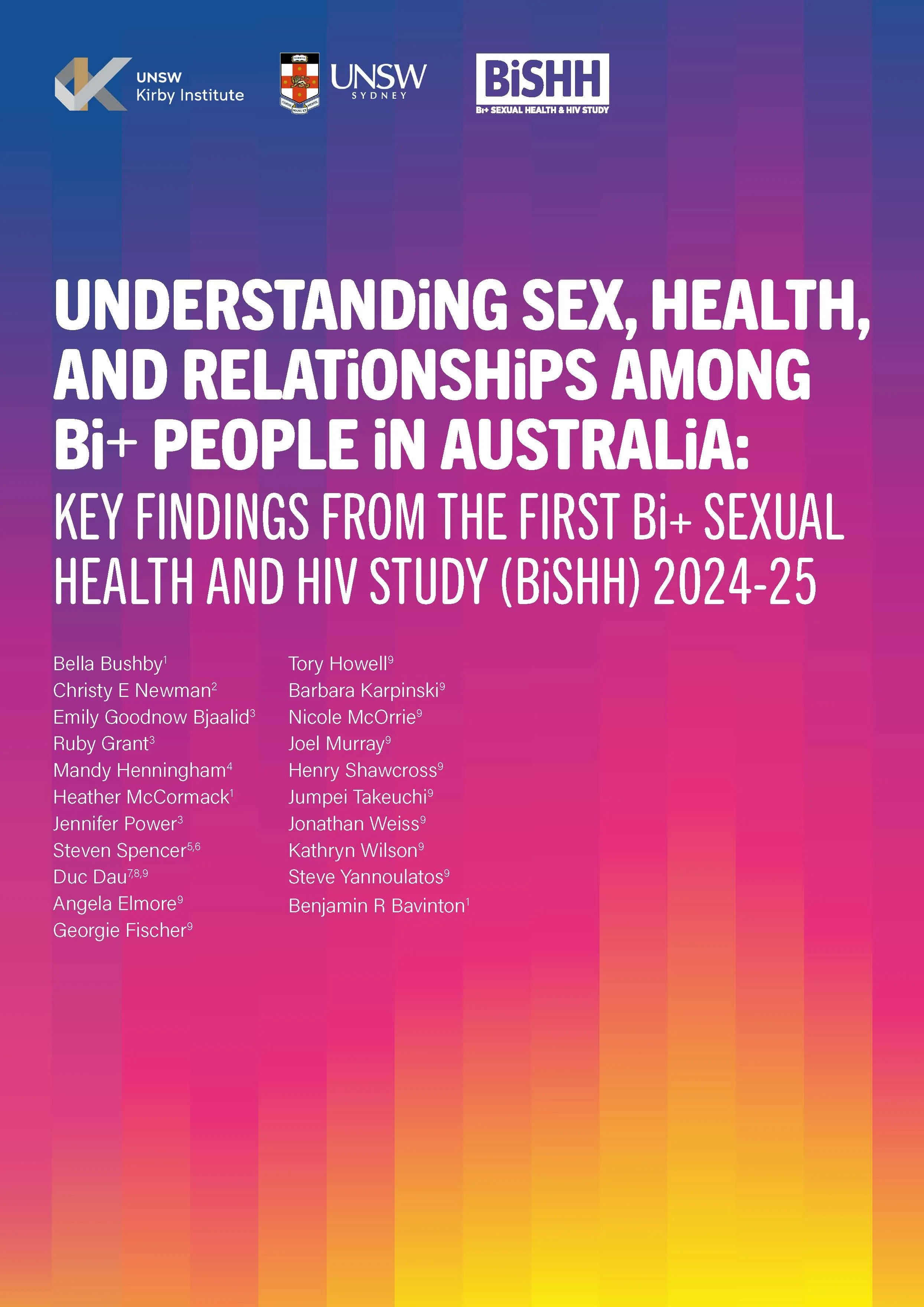
Bi+ Sexual Health and HIV (BiSHH) study - the first national survey of sex, health, and relationships designed specifically for the bi+ community in Australia. Report released 2026. See media release with summary of findings.
Private Lives 3 - Australia’s largest national survey of the health and wellbeing of LGBTIQ people to date. It was conducted by the Australian Research Centre in Sex, Health and Society at La Trobe University. Report released 2020.
Writing Themselves In 4 - a survey of LGBTQA+ people aged 14 to 21 about their experiences with education, homelessness, harassment, assault, mental health, community connections, and more, alongside key recommendations for action. Report released 2021.
If you are able to access academic publications (e.g. through university or a research institution), the Journal of Bisexuality publishes a lot of current research on bi+ issues.
Bent TV
Bent TV is a long-running Melbourne-based community TV program focusing on LGBTIQA+ issues with a lens of inclusion, affirmation and lived experience. You can stream at Bent TV. The episodes listed here feature Bi+ Pride Victoria members and guests exploring a huge range of issues relating to bisexuality.
MBN Research Launch. Discussion of Bi The Way Research Guidelines, and Intimate Partner Violence: Bi+ Inclusive Practice Report. (Penny McKay, Gabi Boyd, Juniper Muller, Ruby Mountford, Amber Loomis and Jayde de Bondt, September 2023.)
Is Passionate Activism an Act of Love? (Juniper Muller and Duc Dau, May 2022)
How do you Represent Bisexuality in the Erotic? The erotic through history, bisexual behaviour through the centuries, terminology and its limits. (Juniper Muller and Duc Dau, April 2022)
Experiencing Pride. What pride means to bi+ people, pride as the opposite of shame, connection to history, community, activism, sharing joy, and safety. (Juniper Muller and Megan Alexandra, February 2022)
Attraction - Who to, Who not? Exploring attraction - who you are attracted to, and by how much? Who you are not attracted to? Are you attracted to all genders, some genders, specific genders? (Juniper Muller and Megan Alexandra, January 2022)
How to Reconnect After Long Periods in Lockdown. Reconnecting with community after periods of social isolation due to COVID-19. (Juniper Muller and Megan Alexandra, October 2021)
Bi+ Visibility. Advocacy, multi gender attraction, labels, invisibility, vulnerability, fears, fluidity, checking in with yourself, being treated as if the "B" is silent in LGBTIQA+, personal wellbeing, growth, and connection. (Juniper Muller and Megan Alexandra, September 2021)
Being a Bisexual Parent. The complexities of being a bisexual parent, identity, defiance, fluidity, and assumptions (just to start with)! (Juniper Muller and Megan Alexandra, July 2021)
Bi+ Health Awareness Month. Exploring the vulnerability and health concerns experienced by bi+ people. (Juniper Muller and Megan Alexandra, March 2021)
Physical Romantic Attraction. Bodies, physical or sexual and romantic attraction, interactions, and what can make bi+ people special. (Juniper Muller and Megan Alexandra, November 2020)
Language, Phobia, Choice. Do we waste too much time discussing labels that are an individual choice? (Juniper Muller and Megan Alexandra, October 2020)
Bisexuality and Invisibility. Visibility, legibility, isolation, validating, witnessing, the swamp of shame, finding community, who are Bi people visible to, partner dynamics, and limiting sexualities. (Juniper Muller and Megan Alexandra, September 2020)
The Melbourne Bisexual Network. Bisexuality in the context of the International Day Against Homophobia, Biphobia, Interphobia & Transphobia (IDAHOBIT). (Juniper Muller and Megan Alexandra, April 2020)
Interviews from Big Bi+ Bonanza celebrating Bi Visibility Day 2019. All the action from Big Bi+ Bonanza, a festival of food, music and more, proving again that bi people exist and are everywhere. (Anthony Lekkas plus guests, September 2019)
Bis Visibility Day - 23 September - Big Bi+ Bonanza festival. MBN and shOUT Youth Choir are co-hosting a one day festival, Big Bi+ Bonanza, celebrating Bi+ Visibility Day 2019. (Anthony Lekkas, Megan Alexandra, Elly. September 2019)
Bisexual Mental Health - Melbourne Bisexual Network. A network of professionals taking action based on the outcomes of the largest bisexual mental health study in Australia. (Anthony Lekkas and Ruby Mountford, November 2017)
Still have some questions?
Have a resource you’d like to contribute?
RESOURCE DIRECTORY DISCLAIMER
Our website lists a range of materials and organisations which may be of interest to Bi+ people. These resources represent a variety of approaches, perspectives, and lived experiences. We have curated this collection in good faith. However, Bi+ Pride Victoria does not necessarily endorse the statements, opinions, policies or practices of the organisations or individuals featured. We encourage you to explore the resources and engage with those that best meet your own needs and values.